
Rolling Out New Technology in General Practice
- Tara Humphrey

- 5 days ago
- 4 min read
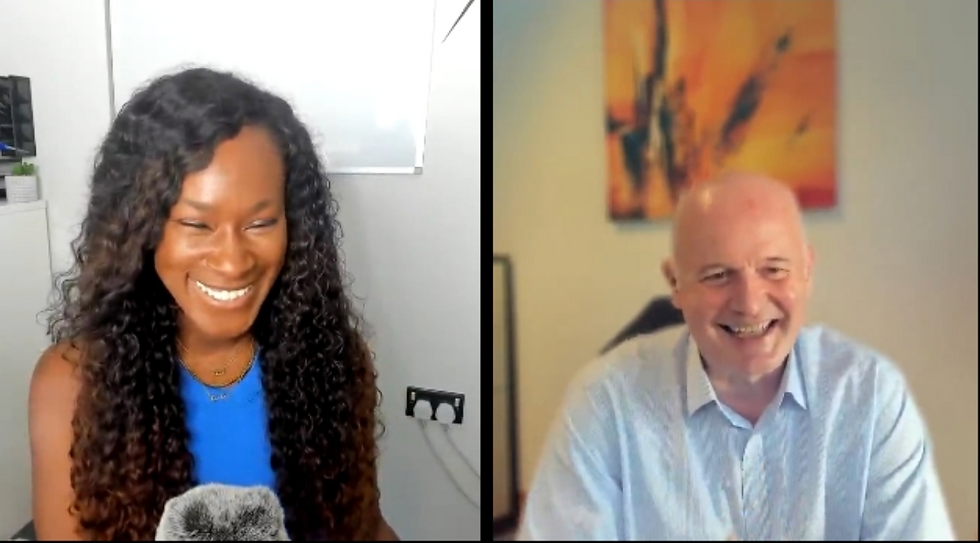
At THC Primary Care, we create resources for primary care leaders, and the focus of this blog is an interview with Andrew Whiteley. I was expecting to talk about software, as he founded Lexacom 26 years ago, after fifteen years as a GP in South Warwickshire, and built the first version himself out of frustration with broken dictaphones and the cost of repairs.
But beyond the dictation, speech recognition, and ambient AI, what I took from the conversation were three things that apply to any of us leading change in primary care, whether or not we ever touch his product. Trust, time and judgement. None of them is a technology problem. All of them are leadership ones.
If you are trying to facilitate change or introduce something new, this blog is for you.
But beyond the dictation, speech recognition, and ambient AI, what I took from the conversation were three things that apply to any of us leading change in primary care, whether or not we ever touch his product. Trust, time and judgement. None of them is a technology problem. All of them are leadership ones.
If you are trying to facilitate change or introduce something new, this blog is for you.
Trust is built slowly and lost in a single rollout
Andrew was open about the hardest period in the company's history. When moving customers from the old platform to the new one, he trusted a team that told him one thing while the reality was different.
“Having spent twenty-four and a half years building up a reputation of complete trust with our customers, I feel we let them down,” he told me. “I invited people to update. The keenest, most loyal customers signed up. And their experience was not what I was expecting.”
He didn't reach for excuses. “It was my fault for not checking. But I didn't want to be a micromanager, so when a senior person was telling me one thing, I trusted them.”
It is something we can all relate to. The tension between micromanaging your team and being so arm's length that you lose sight of the detail and its implications.
On rebuilding trust, his answer was simple.
“The only thing you can do is say sorry, and then build that relationship up again. And that only happens if both sides want it to happen, and if you are consistent and true to what you say.”
His rule now is to never make promises he cannot keep. When something goes wrong, rebuilding trust is slow relationship work, and it applies whether you run a software company, a practice or a PCN.
Time is the cost nobody puts in the business case
We spent a while on the reality of getting people to actually use new technology.
Andrew was clear.
“Every bit of software now that is as complicated as ours needs a bit of time. But you can get excellent results with a click of a button.” You get to 95% with one press. The last five percent, the version that fits exactly how you work, takes a little time.
We roll something out, expect it to be intuitive from the first click, and decide the tool is bad when it is not. Sometimes it is. Sometimes it just needed time, and nobody protected any.
In general practice, the question is who has that time. As managers, we have a little of it. A clinician sitting down in front of a patient does not. The tool has to earn its place in the room immediately, and the learning has to happen somewhere else. As Andrew put it,
“Time is the one commodity you can't buy. All you can do is try and do things more efficiently so you have more of it.”
🎯 If you are leading a rollout, budget for the learning curve as deliberately as you budget for the licence. Otherwise, you have bought a tool that nobody has the time to learn.
Judgement matters more than whatever is newest
The question to ask of any tool is not whether it is the newest, but whether it solves the problem in front of you.
“A technology is only as good as its application,” he said. Some of what his software does, including coding and redaction of patient data, is done with traditional programming rather than AI because it is more reliable and cheaper to run. “Why go to the expense of expensive servers, using up lots of energy, when you can just do it on the machine?”
He takes the same approach to competition. Andrew used to find the louder, better funded players unsettling.
“You can spend a lot of time worrying about that, or you can stick to your core principle: what are the problems our customers are facing, and how do we make it better. If you do that well, they will do the talking for you.”
🎯 He also made a point about free services. And questioned. “How do you value something that is free? They can offer it for free because they have very large financial backing, which is going to have to be repaid at some point.” Free is rarely free. The cost is just deferred.
The tech is the easy part
The technology was never the hard bit.
The hard parts are the human and the systemic ones.
Earning trust slowly and protecting it. Giving people the time to learn. Keeping enough judgment to choose the right tool rather than the loudest one.
That is why I chose to partner with Lexacom, a company that has spent 26 years inside the NHS and understands the system the technology has to live in. And it is why I keep saying that digital transformation is not a procurement exercise.
If you want the full conversation, click on the graphic below.
Lexacom brings digital dictation, speech recognition, and ambient AI together on one platform, with coding and patient data redaction handled on your own machine rather than in the cloud.
If you are interested in what they offer, contact the team at sales@lexacom.co.uk or 01295 236910, or Andrew directly at andrew.whiteley@lexacom.co.uk and let me know you saw this blog.


.png)
